
-
Your Rights
Title
- About us
- Partnership
- Help


 Română
 Italiano
 Deutsch
 Français
 Nederlands
 Español
 Português
 Magyar
 Polski
 Shqip
Shqip
 Български
 Čeština
 Русский
 Dansk
Dansk
 Ελληνικά
 Lietuvių
 Македонски
 Norsk
Norsk
 Slovenščina
 Српски
 Svenska
 Հայերեն
 Eesti
Eesti
 Türkçe
 Slovenčina
 Українська
 Latviešu
 Suomeksi
- My flight was cancelled
- My flight was delayed
- I missed my connecting flight
- I was denied boarding
- My flight was overbooked
- My flight was advanced
- My flight was diverted
- About us
- Partnership
- Help
 Română
 Italiano
 Deutsch
 Français
 Nederlands
 Español
 Português
 Magyar
 Polski
 Shqip
Shqip
 Български
 Čeština
 Русский
 Dansk
Dansk
 Ελληνικά
 Lietuvių
 Македонски
 Norsk
Norsk
 Slovenščina
 Српски
 Svenska
 Հայերեն
 Eesti
Eesti
 Türkçe
 Slovenčina
 Українська
 Latviešu
 Suomeksi
- Sign In Claim compensation
Flight Cancelled Fly Safair? How to Handle It, Get Compensation, and Find Alternative Solutions
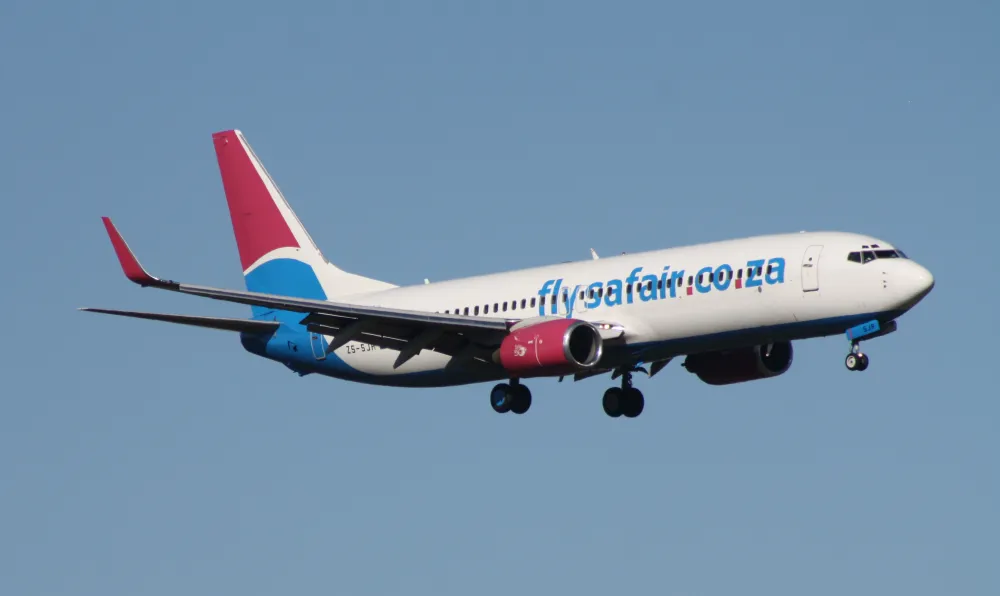
What to Do If Your Fly Safair Flight Gets Cancelled
If you’ve ever had your travel plans tossed upside down by a Fly Safair flight cancellation, you’re not alone. Whether you were heading out for business, a long-awaited vacation, or just trying to get home, a cancelled flight is always a headache. But before you panic or resign yourself to airport floor naps, let’s walk through what you can do, your rights as a passenger, and how Trouble Flight makes the whole compensation process surprisingly painless.
Understanding Fly Safair and Their Routes
Fly Safair, based out of South Africa, is well-known for its affordable domestic flights. While they’re not based in Europe, many travelers from Europe (and nearby regions) find themselves using Fly Safair to hop across South Africa or as part of a longer international journey that includes connections with European or Middle Eastern airlines. If you’ve booked with Fly Safair as part of a multi-leg journey or simply decided to enjoy some sun in Cape Town, you’ll want to know how to handle a cancellation—especially when you’re far from home.
Your Rights as a Passenger: European and International Flights
Let’s get one thing clear: your passenger rights depend a lot on where your flight starts, ends, and which airline operates it. For European travelers, the holy grail is EU Regulation 261/2004 (EC261). It covers flights:
Departing from an EU country, regardless of the airline,
Or, arriving in the EU with an EU airline.
So, if you’re flying Fly Safair within South Africa only, European law doesn’t apply. But if you have a connecting flight on a single ticket from, say, Paris to Johannesburg with a European airline and then onward with Fly Safair, there’s a chance EC261 protections apply for the EU segment. If you booked separately, your protections will be based on South African law and the airline’s own policies.
Even if EC261 doesn’t apply, many international conventions (like the Montreal Convention) still protect you against losses due to cancellations, especially if your journey spans continents or involves international connections.
What Are You Entitled To If Your Fly Safair Flight is Cancelled?
The Essentials: Refunds, Rerouting, and Basic Care
No matter what, Fly Safair (or any airline) must at least:
Offer a full refund if you choose not to travel,
Or, rebook you on the next available flight (at no extra cost),
Provide basic care at the airport (meals, water, hotel accommodation if needed),
Reimburse you for reasonable expenses incurred due to the cancellation (if not directly provided).
If you’re stranded overnight or for a long period, keep all receipts—this is essential for making a claim!
Compensation: When Do You Get Money, Not Just a Ticket?
Here’s where it gets interesting: compensation is only owed if the cancellation was within the airline’s control and you weren’t told far in advance (usually 14 days). Technical problems, staff issues, or overbooking? That’s on the airline. Extreme weather or air traffic strikes? Sorry, no dice—it’s considered “extraordinary circumstances.”
Within the EU: EC261 can get you up to €600 per passenger if the flight was to/from the EU, on certain routes.
International: The Montreal Convention covers many countries, offering refunds and additional compensation for damages, but usually not “fixed” payouts like the EU law.
If you booked through a European airline but your second leg is on Fly Safair, you might have even more rights. It’s a legal maze, but that’s exactly what Trouble Flight is here for.
Immediate Steps When Your Fly Safair Flight Gets Cancelled
1. Don’t Panic—Document Everything
The most important thing: get written confirmation from the airline about the cancellation. If possible, request a printout or email stating the reason. Screenshot everything—emails, booking changes, new flight details, meal vouchers, boarding passes, even the airport departure board. These could be essential for your compensation claim.
2. Ask for Alternatives and Be Flexible
Don’t wait for a magic announcement. Head straight to the Fly Safair counter or customer service desk and ask:
Can you be put on the next available flight?
Are there seats with a partner or other airlines?
If you must reach a destination urgently (especially if you have a connecting flight with another carrier), sometimes it’s worth asking about rerouting to nearby airports or cities—even on a different airline.
Tip: Other Airlines Serving Similar Routes
If Fly Safair can’t help, check which other airlines fly your route. In South Africa, you might look at Airlink, South African Airways, or even international carriers if you’re near Johannesburg, Cape Town, or Durban. In many cases, low-cost carriers have limited flexibility, but a more premium airline might have last-minute seats—even if it means paying a difference and claiming it later.
For European-bound travelers, if you’re stuck and there’s no quick fix, look at booking with a different carrier (sometimes at your own expense) and claim reimbursement later. Trouble Flight can advise if your situation qualifies.
3. Collect Receipts for All Expenses
Anything you spend because of the cancellation—meals, transport, hotels—save the receipts! Most airlines, including Fly Safair, will ask for proof before reimbursing.
4. Check Your Travel Insurance
Some travel insurance policies cover extra expenses, alternative transport, or even missed events due to cancellations. It never hurts to double-check your policy (and, in some cases, your credit card provider’s coverage).
“Why Was My Fly Safair Flight Cancelled?”—Top Reasons and What They Mean for You
Common Reasons for Cancellations
Technical or Maintenance Issues: Planes need to be safe! This is usually within the airline’s control (meaning compensation is likely due).
Crew Shortages or Strikes: Again, this is the airline’s responsibility, unless it’s a national strike.
Weather: Out of everyone’s control—no compensation, but you should get rerouted or refunded.
Operational Restrictions: Sometimes, airport issues or regulatory actions affect flights. If it’s a unique situation (like a sudden closure or government order), compensation is less likely.
What If the Reason Isn’t Clear?
Always ask the airline to specify the reason in writing. If they refuse, make a note of who you spoke to, when, and what they said. Trouble Flight’s team specializes in getting to the bottom of tricky situations and maximizing your chances for compensation.
Making the Most of a Bad Situation: Practical Suggestions for Stranded Travelers
Alternative Airports
If you’re flexible, consider rerouting to a nearby airport—South Africa’s major airports are well connected, and local taxis, buses, or trains can bridge the gap. For European travelers, it’s common to fly into one city and take a train or rental car to your final destination. If you were booked into Cape Town but the next available flight is to Johannesburg, it might still be worth it—especially if you have a connecting international flight to catch.
Rebooking Tips
Ask for Partner Airlines: Sometimes Fly Safair can reroute you with partners or even competitors—especially if you’re booked on a “through” ticket.
Split Your Trip: If you have to get moving, ask about flights to a major hub, then book onward travel yourself. You can claim these expenses later if your delay qualifies.
Use Apps and Alerts: Flight tracking apps or the airline’s mobile app can alert you to available seats faster than waiting at the desk.
Other Transport Options
South Africa, like much of Europe, has decent intercity transport options—buses, rental cars, even trains between major cities. Sometimes, getting to your destination by land is faster than waiting for the next available flight.
What If I Missed a Connection Because of My Cancelled Fly Safair Flight?
If you booked your connecting flights on a single ticket, the airline should help reroute you to your final destination—even if your next flight is with a different airline. If you booked separately, you might be on your own, but keep all documentation. Many travelers don’t realize they’re still entitled to a refund for the missed flight segment, and possibly more under international conventions.
How Trouble Flight Can Help (and Why It’s Worth It)
Let’s face it: claiming compensation from airlines is no one’s idea of fun. Airlines know the rules, but they also know most people give up after the first “No.” That’s where Trouble Flight comes in. Our job is to handle all the paperwork, negotiations, and (if it comes to it) legal action on your behalf.
The Trouble Flight Advantage
No win, no fee: If you don’t get paid, neither do we.
Up to €600 per passenger: That’s serious money for a lost day of travel.
We handle the hassle: From reading the fine print to arguing with the airline’s lawyers.
Fast, free “Compensation Calculator”: Find out instantly if your case qualifies (it’s an estimate, not a binding offer).
All you do is fill in your details and upload any relevant documents. We’ll chase the airline, fight your corner, and transfer your payout (minus our commission) straight to your account. And if the airline pushes back? We’re ready to take them to court, for an additional (but still fair) fee only if we win.
Extra Tips: Protect Yourself Against Future Cancellations
Book Direct When Possible: Direct bookings are usually easier to change or refund than third-party agency bookings.
Use a Credit Card: Many cards offer built-in travel protections.
Sign Up for Airline Alerts: You’ll be first to know about any changes.
Keep All Correspondence: Always easier to claim with more documentation.
Ready to Claim What’s Yours?
Nobody wants to spend their holiday, business trip, or family visit fighting for compensation after a cancelled flight. That’s exactly why Trouble Flight exists. Don’t leave money on the table, and don’t let airlines off the hook. With our expertise, you can turn an infuriating cancellation into a silver lining. Check your eligibility in minutes and let us do the hard work—your travel plans (and wallet) will thank you.
Read also
- Flight Delayed Timișoara
- Flight Overbooking in Grosseto – Know Your Rights & Claim Compensation
- Flight Cancelled Brussels Airlines – What To Do, Your Rights & How To Get Compensated
- Flight Delayed Brussels Airlines – What Now? Here’s What You Can Do
- What to Do If Your Flight in Stavanger Is Delayed
- How Long Can Airlines Delay Your Flight?
What our customers say about us


