Transavia
On this page
- Understanding Your Rights: Transavia and EU Regulation 261/2004
- Transavia Flight Delay Compensation
- Compensation and Refunds for Cancelled Transavia Flights
- Overbooking, Denied Boarding, Connections, and Diversions
- When Can Transavia Deny Compensation?
- Essential Steps and Evidence Checklist
- How Trouble Flight Enforces Your Transavia Claim
- Frequently Asked Questions About Transavia Flight Compensation
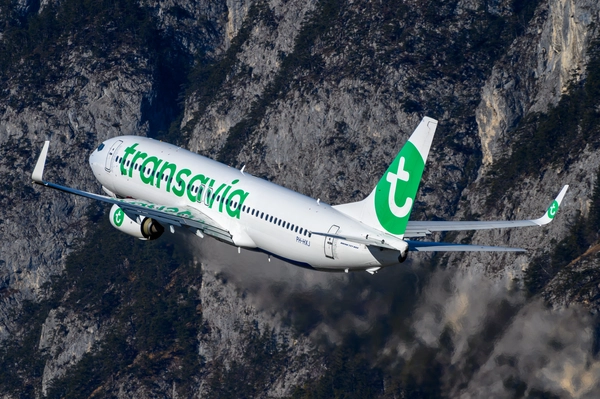
If your Transavia flight was delayed by 3 hours or more, cancelled on short notice, or disrupted due to overbooking, you could be entitled to statutory compensation of €250, €400, or €600 under European law (Regulation EC 261/2004). Because Transavia Airlines C.V. (HV) and Transavia France S.A.S. (TO) are both EU-licensed air carriers, these passenger rights apply to almost all their flights, whether departing from an EU airport or returning to Europe from a non-EU destination. Beyond cash compensation, you are also entitled to immediate care such as meals and accommodation during long airport waits.
Enforcing your rights against an airline can feel overwhelming when claims are delayed or rejected. Trouble Flight simplifies the process by assessing your flight details, verifying the exact operating carrier, and pursuing your claim legally. You can start by checking your journey details through the Trouble Flight claim check to see what you may be owed.
Understanding Your Rights: Transavia and EU Regulation 261/2004
Transavia operates as a low-cost carrier within the Air France–KLM group under two main operating entities: Dutch-registered Transavia Airlines C.V. (IATA code: HV) and French-registered Transavia France S.A.S. (IATA code: TO). Because both operating companies are licensed in EU Member States (the Netherlands and France), passenger protections under EU Regulation 261/2004 apply across their entire flight network.
You are protected under EU261 when:
- Your Transavia flight departs from any airport located within an EU Member State, Switzerland, Norway, or Iceland.
- Your Transavia flight departs from a non-EU country (such as Morocco, Turkey, Tunisia, or the United Kingdom) and arrives at an EU airport.
For flights departing from United Kingdom airports, the UK's parallel passenger protection law (UK261) provides equivalent rights, setting statutory compensation in British Pounds (£220, £350, or £520 depending on distance).
Transavia Flight Delay Compensation
If my flight was delayed, statutory compensation depends on your arrival time at the final destination, not the departure delay. Under controlling legal precedents, arrival time is defined as the exact moment at least one main door of the aircraft opens at the terminal gate and passengers are permitted to leave.
To qualify for financial compensation, your flight must land at least 3 hours after the scheduled arrival time. Payout amounts are structured by flight distance:
- €250 for flights up to 1,500 km (e.g., Amsterdam to Paris or Rotterdam to London).
- €400 for intra-EU flights over 1,500 km (e.g., Amsterdam to Athens) and all non-intra-EU flights between 1,500 km and 3,500 km.
- €600 for non-intra-EU flights exceeding 3,500 km.
Note on flight limits: Long-distance flights that remain entirely within EU territory (such as flights from mainland Europe to the Canary Islands) remain subject to the €400 limit under EU261 rules. Additionally, if a non-intra-EU flight over 3,500 km arrives between 3 and 4 hours late, the carrier may reduce the €600 payout by 50% to €300.
Right to Care During Delay Waits
Regardless of the cause of the delay, Transavia must provide essential care at the airport once departure is delayed beyond specific thresholds (2 hours for flights up to 1,500 km; 3 hours for flights between 1,500 km and 3,500 km; 4 hours for flights over 3,500 km). Care includes free food and refreshment vouchers, two brief telephone calls or emails, and hotel accommodation with round-trip transport if an overnight delay becomes necessary.
The 5-Hour Departure Delay Rule
If your departure delay reaches 5 hours, you are entitled to abandon your trip and request a full refund of your ticket for unflown segments, along with a return flight to your original point of departure if you are midway through a connecting journey.
Compensation and Refunds for Cancelled Transavia Flights
When my flight was cancelled less than 14 days before the scheduled departure date, Transavia must offer you a choice between:
- A full refund of the ticket cost within 7 days.
- Re-routing to your final destination at the earliest opportunity under comparable transport conditions.
- Re-routing at a later date convenient to you, subject to seat availability.
If you accept a replacement flight, fixed compensation ranging from €250 to €600 remains payable unless Transavia notified you more than 14 days prior, or provided alternative flights matching strict departure and arrival timing windows close to your original schedule.
Furthermore, under European court rulings, if my flight was advanced by more than 1 hour prior to the original departure time without adequate notice, it is legally treated as a flight cancellation, triggering statutory compensation rights.
Overbooking, Denied Boarding, Connections, and Diversions
Other operational disruptions also fall under European passenger protection laws:
- Overbooking and Denied Boarding: If my flight was overbooked and I was denied boarding involuntarily despite presenting myself on time with a valid booking, you are immediately entitled to standard compensation (€250 to €600), care at the airport, and a choice between a refund or alternative routing.
- Missed Connecting Flights: If I missed my connecting flight on a single multi-leg reservation due to an earlier delay by Transavia, your right to compensation is determined by the total delay upon reaching your final destination.
- Diverted Flights: If my flight was diverted to a different airport and resulted in landing 3 hours or more late at your final planned destination, compensation may also be due.
When Can Transavia Deny Compensation?
Transavia is exempt from paying cash compensation only if the disruption was caused by extraordinary circumstances that could not have been avoided even if all reasonable measures had been taken. Extraordinary circumstances include severe weather (e.g., dense fog, blizzards), air traffic management decisions, airport closures, acute political instability, or unexpected bird strikes.
However, routine technical issues, mechanical breakdowns during pre-flight checks, airline staff shortages, operational delays, and late-arriving aircraft from earlier legs are considered standard operational risks. They do not constitute extraordinary circumstances. The legal burden of proof lies entirely on Transavia to demonstrate both the extraordinary nature of the event and the reasonable measures taken.
Essential Steps and Evidence Checklist
If your Transavia flight suffers a delay or cancellation, gather key details to protect your claim:
- Keep all travel documents: Retain physical or electronic boarding passes, booking confirmations, and e-ticket receipts.
- Document actual timings: Note the exact time the aircraft doors opened upon arrival at the gate.
- Request disruption reasons: Ask airline staff at the gate for written confirmation of the delay or cancellation cause.
- Save expense receipts: Keep itemised receipts for meals, non-alcoholic drinks, or transportation if the carrier fails to provide duty-of-care vouchers.
- Be cautious with vouchers: If offered travel vouchers or coupons, ensure accepting them does not require signing a waiver of your statutory rights to cash compensation under EU261.
How Trouble Flight Enforces Your Transavia Claim
Claiming compensation directly can involve complex technical arguments over flight data, weather reports, and legal definitions. Trouble Flight handles the legal and administrative process on your behalf:
- We analyze official radar and meteorological data to verify actual delay causes.
- We determine the exact legal entity (Transavia Netherlands or Transavia France) responsible for your flight.
- We handle all formal legal correspondence with the airline's legal team.
- If necessary, we pursue court proceedings to enforce your statutory rights.
To check if your disrupted flight qualifies, start your case through the Trouble Flight claim portal today.
Frequently Asked Questions About Transavia Flight Compensation
How long do I have to file a compensation claim against Transavia?
Limitation periods depend on the legal jurisdiction where the claim is brought. Claims brought under Dutch jurisdiction generally have a 2-year limitation period, while claims under French jurisdiction have up to 5 years, and UK claims allow up to 6 years. Submitting your claim through Trouble Flight as soon as possible helps prevent time limits from expiring.
Are non-EU flights operated by Transavia eligible for compensation?
Yes. Because both Transavia Airlines C.V. and Transavia France S.A.S. are licensed in the EU, EU Regulation 261/2004 covers their flights when arriving into an EU airport from a non-EU country (such as Morocco, Turkey, or the UK), as well as all departures from EU airports.
What should I do if Transavia offers me a travel voucher?
Under EU261, financial compensation must be paid in cash, electronic bank transfer, or cheque unless you explicitly agree in writing to accept travel vouchers. You are under no obligation to accept a voucher instead of cash.
Can I claim compensation if my Transavia flight was part of a package holiday?
Yes. Statutory compensation rights under EU261 apply equally whether you purchased your Transavia ticket directly, through an online travel agency, or as part of a package holiday.