Korean Air
On this page
- Flying long haul with Korean Air — and getting stuck mid-journey?
- Korean Air isn’t European, so are you even covered?
- “My Korean Air flight was delayed – can I get compensation?”
- How much could you receive?
- What to do if you're still at the airport
- Missed your connection? Here’s what matters
- What if your delay went overnight?
- Alternative routes and backup plans—be flexible, be smart
- Don’t accept travel vouchers blindly
- Why most people don’t claim… and why you should
- Can you still claim if the delay was months ago?
- Don’t let the airline keep what’s legally yours
Flying long haul with Korean Air — and getting stuck mid-journey?
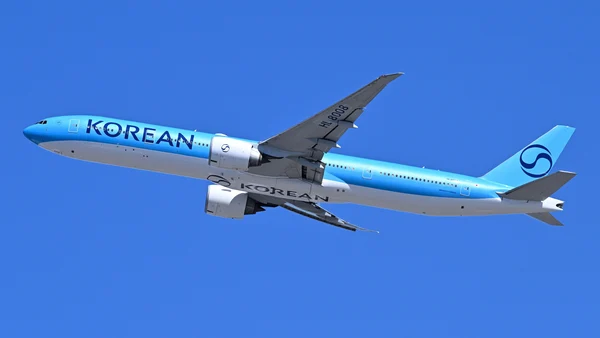
Let’s be honest: Korean Air usually delivers a smooth and elegant experience. It’s South Korea’s flagship carrier, after all. Stylish uniforms, decent food, well-maintained aircraft, and friendly service—it’s not your typical low-cost experience. But even the best can hit turbulence when it comes to delays. And if you’ve ever found yourself pacing the terminal in Paris, Vienna, or Frankfurt waiting for your flight to Incheon, you know the frustration that bubbles up fast.
Whether it was a mechanical issue, a late incoming aircraft, or a vague “operational reason” nobody can explain, a delay on a Korean Air flight isn’t just an inconvenience. Depending on the circumstances, it could mean money in your pocket—up to €600, actually.
Let’s unpack how it works.
Korean Air isn’t European, so are you even covered?
It’s a fair question, and the answer depends on one key factor: where your flight started.
Here’s how European Regulation EC 261/2004 works:
If your flight departed from an EU/EEA country, you're automatically covered—no matter which airline operates it.
If your flight arrived in the EU/EEA but departed from outside, you’re only covered if the airline is registered in the EU.
So here’s the catch: Korean Air is not an EU-based airline. That means:
✈️ Incheon to Paris = not covered under EC261
✈️ Paris to Incheon = covered under EC261
If your delay happened on the way out of Europe, you’ve got rights under EU law. But if you were flying into Europe, your options are more limited. That said, other legal routes like the Montreal Convention may still apply for things like additional expenses or extreme delays, and Trouble Flight can help navigate those, too.
“My Korean Air flight was delayed – can I get compensation?”
Let’s walk through what qualifies.
Arrival delay of 3+ hours: What counts is when the plane doors open at the destination—not when it took off.
Departing from the EU or EEA: As mentioned, this is crucial.
The airline is responsible: Delays must not be caused by "extraordinary circumstances" like severe weather or political unrest.
So, if your flight from Madrid to Seoul took off late because of a maintenance issue or a late crew rotation, and you landed more than 3 hours behind schedule, you may be eligible for €600 under EU law.
But if the delay was due to a typhoon near East Asia or an airport closure beyond the airline’s control, it's likely considered an “extraordinary circumstance,” which means no compensation.
And remember: airlines often blame weather or other vague “airspace restrictions,” even when the reality is much more nuanced. Trouble Flight has access to flight data, weather reports, and legal precedents to check if the excuse holds water.
How much could you receive?
Let’s talk numbers. If you're eligible under EC261, here’s what the law says:
€250 – for flights under 1,500 km
€400 – for flights between 1,500 and 3,500 km
€600 – for flights over 3,500 km
Most Korean Air flights between Europe and South Korea are well over 3,500 km, so if your delay meets the criteria, you’re looking at the maximum payout.
And it’s per person. So if you're traveling with family or colleagues and all of you were delayed, each passenger could be entitled to their own compensation.
What to do if you're still at the airport
If you're reading this while sitting in a lounge or staring at a delayed departure board, you can take a few easy steps to make things smoother:
Keep your boarding pass and booking confirmation
Write down the actual arrival time (take a photo of the arrival board or ask a staff member)
Save receipts if you buy food, pay for hotel stays, or use transport—these can be reimbursed in some cases
Ask the airline why the delay happened—and try to get it in writing
Even if it’s just a screenshot of the delay message on the airport monitor or app, it's a start.
You don’t need to yell at airline staff or demand things in all caps. Just keep records and let Trouble Flight take care of the rest. You enter your flight details into the Compensation Calculator, and we’ll figure out if you’re owed money.
Missed your connection? Here’s what matters
Korean Air operates connecting flights through Seoul to many Asian destinations—Tokyo, Bangkok, Manila, Sydney—you name it. If your initial flight from Europe was delayed, causing you to miss your onward connection, you might still have a valid case if all flights were on a single booking.
Even if the second leg wasn’t in Europe, the first delay can make the entire journey eligible for compensation under EC261—as long as it originated from an EU airport.
So a flight like Rome → Seoul → Sydney, delayed at the start in Rome, could qualify for compensation for the whole delay if you arrived in Sydney 3+ hours late due to the original European delay.
Split-ticket bookings, unfortunately, don’t get the same protection.
What if your delay went overnight?
For long-haul routes like Korean Air’s, delays sometimes stretch into the next day. If this happens, the airline must provide:
Hotel accommodation
Transportation between airport and hotel
Meals and refreshments during the wait
These aren’t “nice-to-have” perks. They’re legal obligations under EC261 (for covered routes) and international agreements like the Montreal Convention. If the airline doesn’t offer help, keep your receipts. Trouble Flight can include them in your claim later.
Even if you’re flying out of Seoul or Bangkok and the return leg into Europe is delayed, some costs may still be recoverable under separate rules.
Alternative routes and backup plans—be flexible, be smart
Let’s say you’re in Frankfurt or Milan, and your Korean Air flight gets delayed by hours. Instead of waiting indefinitely, look at:
Alternative departure cities – maybe Amsterdam or Zurich has a similar flight
Short-haul options to other nearby airports where your airline has presence
Train connections – if you’re flying to Seoul and there’s no faster air route, use high-speed trains to reach another airport for rebooking
While Korean Air has a limited European network, some airports have partner carriers or codeshare options that may help rebook quicker. Just keep everything on record. If you rebook something yourself because the airline didn’t offer options in time, that can work in your favor later when claiming compensation.
Don’t accept travel vouchers blindly
Airlines love offering vouchers as a form of apology. You might get offered a €150 travel voucher when you’re actually entitled to €600 in cash.
Once you accept a voucher or sign a waiver, you might give up your right to claim. That’s why it’s essential to check your legal rights first—before agreeing to anything. A voucher is rarely the better deal.
With Trouble Flight, you’ll know exactly how much you're owed under EU law.
Why most people don’t claim… and why you should
A surprising number of passengers never file a claim after a delayed flight. They either assume they’re not eligible or don’t want to deal with the airline’s legal jargon and endless email chains.
That’s where Trouble Flight comes in.
We don’t ask you to write a long complaint or call anyone. You enter your flight details. We check eligibility, prepare your case, contact the airline, and escalate if needed—even in court. You pay nothing unless we win, and if we do, our commission is 25% (plus VAT), or 50% including VAT if legal action is needed.
Simple. Clean. No stress.
Can you still claim if the delay was months ago?
Yes! You can claim retroactively. Depending on the country, claims can usually be submitted up to 3 years after the flight date—sometimes even longer.
So even if you were delayed last summer and didn’t do anything about it, there’s still time.
Don’t let the airline keep what’s legally yours
Air travel delays are part of life. But that doesn’t mean you should just shrug and walk away. If your flight was delayed and you had to miss a day of work, pay for food, or sit in an airport hotel when you could’ve been halfway to your destination, you deserve to be compensated.
Whether you were flying from Paris to Seoul, or Rome to Bangkok via Incheon, if Korean Air delayed you by hours and it wasn’t due to something truly outside their control, then you may be entitled to more than just an apology.
Your flight delay could have value—and it’s not measured in frequent flyer miles.
Take the first step. Let Trouble Flight check your case. It only takes a few clicks.