Korean Air
On this page
- So your Korean Air flight was cancelled? Deep breath—let’s fix this
- A little about Korean Air—before we get into the nitty-gritty
- Am I eligible for compensation if my Korean Air flight was cancelled?
- What counts as "extraordinary circumstances"?
- Stranded in Europe after your Korean Air cancellation? Here’s what to do now
- Any other way to get to your destination?
- What if I missed my connecting flight because of this?
- I didn’t file a claim at the airport. Is it too late?
- What’s the process like with Trouble Flight?
- How to avoid this situation next time
- Wrapping it all up…
So your Korean Air flight was cancelled? Deep breath—let’s fix this
Imagine this: You’re packed, on time, maybe even early. Your long-haul flight with Korean Air is the start of something exciting—business in Seoul, a layover in Incheon, or maybe the beginning of a dream trip across Asia. Then suddenly, it’s off the board. Flight cancelled. Just like that.
It’s frustrating, disorienting, and can really derail your plans, especially if you’re traveling from Europe or have a tight connection planned. But here’s something that might surprise you: even though Korean Air is a non-EU airline, European laws may still protect you, depending on your route.
Yes, you might actually be entitled to up to €600 in compensation if certain conditions are met.
So before you accept a travel voucher, wait in line for hours, or spend a fortune rebooking—read on.
A little about Korean Air—before we get into the nitty-gritty
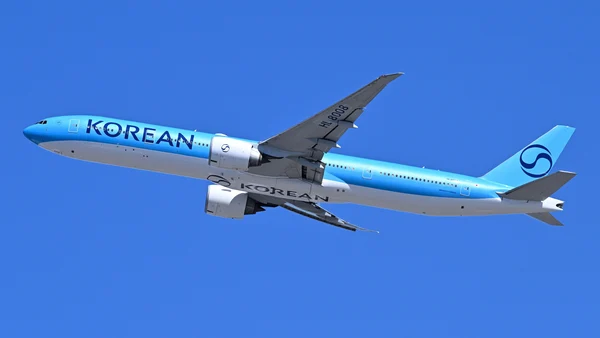
Korean Air is South Korea’s largest airline, flying a mix of long-haul and regional routes. It’s known for its stellar service, solid punctuality record, and that classy blue livery. The airline connects cities like London, Paris, Frankfurt, Milan, and Prague to Seoul and beyond.
You may have picked Korean Air because of its excellent safety record, smooth connections in Incheon, or competitive pricing on premium economy. But like all carriers, sometimes things go wrong: technical faults, crew availability issues, operational problems, or less commonly, weather events.
When cancellations happen, especially at the last minute, it’s not just about missing a flight—it can mean missing days of your trip, spending more on hotels or alternative routes, and the stress of the unknown.
Am I eligible for compensation if my Korean Air flight was cancelled?
Here’s where things get interesting. Even if the airline is based outside of Europe, European Regulation EC 261/2004 still applies in many cases. You could be eligible for compensation if:
Your Korean Air flight departed from an EU country (like Germany, France, Spain, Italy, etc.)
You were informed of the cancellation less than 14 days before your scheduled departure
The reason for cancellation wasn’t due to extraordinary circumstances (like a volcanic eruption or sudden border closure)
So, if you were flying from Paris to Seoul, and your flight got cancelled with little notice and no suitable rebooking—that’s a strong case.
On the other hand, if you were flying from Seoul to Europe, the rules change. Non-EU airlines on routes into Europe aren’t covered. Frustrating? Yes. But if your journey started in Europe—even if it was just the first leg—you might still be covered.
What counts as "extraordinary circumstances"?
Airlines love to toss this phrase around. And yes, sometimes it’s valid. But not always.
If the cancellation was due to:
Unforeseen weather events
Political instability
Air traffic control strikes
Bird strikes
Closed airports
…then it might qualify as an extraordinary circumstance, and you wouldn’t be eligible.
But if the cancellation was due to:
A technical problem with the aircraft
Crew scheduling issues
Operational mismanagement
Last-minute aircraft changes
…then that’s usually within the airline’s control—and you could absolutely be entitled to compensation.
Trouble Flight specializes in analyzing these nuances. They cross-reference weather data, flight logs, and internal reports to understand what really happened. The goal? Get you what you’re owed.
Stranded in Europe after your Korean Air cancellation? Here’s what to do now
If you’re already in the terminal, don’t panic. There are smart steps you can take right now:
Ask for a written explanation of the cancellation. This can help later when filing a claim.
Keep all your receipts. Meals, accommodation, taxi rides—anything you paid for out of pocket should be documented.
Request care and assistance. Under EU rules, you’re entitled to food, drinks, and hotel accommodation if the delay extends overnight.
Request a new flight or refund. If the airline can’t provide a suitable replacement soon, you don’t have to wait days—you can ask for your money back.
And here’s a tip: if you can find another airline flying a similar route sooner and book it yourself, you might be able to claim that cost back later, especially if Korean Air didn’t offer anything comparable.
Any other way to get to your destination?
Absolutely. If your Korean Air flight was cancelled from, say, Rome to Seoul, and you can’t get another flight the same day, you have options:
Look at other major hubs nearby. Milan, Zurich, Vienna—if you can get a flight from there, it might save you a day.
Check if a combination of airlines can help. For example, one to a European hub, then a long-haul to Asia.
Check flights for the next morning. Sometimes a cancellation means a flight gets moved by 12 or 24 hours. Not ideal, but manageable with hotel support.
And don’t forget trains and buses. If your initial departure airport isn’t giving you options, a quick train ride to a bigger airport might unlock more routes.
What if I missed my connecting flight because of this?
If you booked a single itinerary—say, a flight from Barcelona to Seoul via Paris—and your first leg was cancelled or delayed, you could still be eligible for compensation for the whole route, especially if the first part was departing from the EU.
Even if Korean Air only operated the second leg, but the whole trip was on one booking, the chain of responsibility often applies. This is where most people get stuck, assuming they’re not eligible. But if you were delayed at the origin or missed your connection due to cancellation, you might be entitled to both compensation and reimbursement for added costs.
I didn’t file a claim at the airport. Is it too late?
Definitely not.
Most people don’t even think about compensation until days—or weeks—later. Some just try to forget the ordeal, others assume they’re not eligible. But here’s the truth: in many European countries, you can still file a claim for a flight that happened two or even three years ago.
So if your Korean Air flight got cancelled months ago, and you just ate the cost or took whatever they gave you—you can still check your eligibility.
Trouble Flight’s “Compensation Calculator” gives you a free estimate in seconds. It’s not a final offer, but it’s often shockingly accurate.
What’s the process like with Trouble Flight?
This is where things get refreshing.
You don’t need to argue with airline customer service. You don’t need to quote laws or file complaints. You don’t even need to call anyone.
Just upload your flight details, your boarding pass or ticket confirmation, and Trouble Flight will handle the rest. If they determine your case qualifies, they’ll deal with the airline—even escalate it to court if needed.
You only pay if they win, and the commission is clearly stated:
25% (plus VAT) from a successful claim
50% (including VAT) if legal proceedings are required
No surprises. No risk. No headaches.
How to avoid this situation next time
We can’t predict the future, but we can travel smarter:
Avoid ultra-tight connections, especially through big hubs.
Fly earlier in the day. Morning flights tend to cancel less.
Watch the weather. Especially in winter or monsoon season, delays are more common.
Keep a digital folder with your bookings, receipts, and ID handy, just in case you need to file a claim.
And finally, don’t trust the airline to tell you about your rights. Most won’t. That’s why platforms like Trouble Flight matter.
Wrapping it all up…
Korean Air might be reliable most of the time, but cancellations can happen to anyone—even the best carriers. When they do, don’t just sigh and walk away.
You may be legally entitled to up to €600, even if the airline claims otherwise.
Use Trouble Flight’s tool to check your eligibility. It costs you nothing, and it might turn that miserable airport memory into something a bit more worthwhile. After all, if you’re going to lose hours or days of your life to a cancellation, the least you can do is get compensated for it.
Fly smart. Stay informed. And when in doubt, let the experts handle the tough part.