On this page
- Wingo Airlines: Colorful branding, not-so-colorful delays
- Wingo doesn’t sound European. Does EU law still apply?
- When does a delay qualify for money?
- How much can you get for a delayed Wingo flight?
- “I was flying with Wingo and my flight was delayed. What do I do?”
- What about delays because of weather or strikes?
- What if you missed a connection because of a Wingo delay?
- Tips for travelers flying long-haul with Wingo
- What if the delay went overnight?
- Is it too late to claim for a delay that happened months ago?
- Don’t let your delay become just a bad memory
Wingo Airlines: Colorful branding, not-so-colorful delays
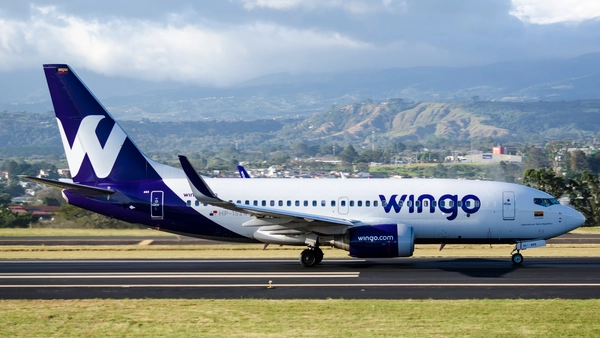
Let’s talk about Wingo. If you’ve ever flown to or from Latin America, especially places like Bogotá, Panama City, or even destinations in the Caribbean, you might have seen Wingo’s bold, quirky branding. They’re part of the growing wave of low-cost carriers promising affordable travel with a cheerful twist. And for the most part, they do deliver.
But even the most enthusiastic branding can’t stop real-world problems like flight delays. Whether it’s aircraft rotation issues, bad planning, or operational bottlenecks, Wingo flights—like any airline’s—sometimes don’t take off as planned.
If you booked a Wingo flight to or from Europe or with a stop in an EU country, and you got stuck waiting for hours, then it's worth exploring whether you could be compensated under European passenger rights law.
That delay? It might be worth €250, €400, or even €600—per person.
Wingo doesn’t sound European. Does EU law still apply?
You’re right—Wingo is a Colombian airline. It's not registered in the EU, and that’s important to keep in mind. But that doesn’t mean you’re out of luck. Your rights depend on the route you were flying.
Under Regulation (EC) 261/2004, you are entitled to compensation for flight delays only if:
Your flight departed from an EU/EEA airport, no matter where the airline is based.
OR your flight arrived in the EU/EEA, and the airline is EU-based.
Since Wingo is not an EU-based airline, you're only covered if your departure point was in the EU.
So, if you boarded a Wingo flight from Madrid to Bogotá and it landed 4 hours late? You’re likely eligible for compensation.
But if your delay happened on the way to Madrid from Bogotá? Unfortunately, EC261 likely doesn’t cover you in that case.
Still, other protections like the Montreal Convention might cover certain expenses related to long delays (hotels, meals, missed connections), and that’s where Trouble Flight steps in to help figure it all out for you.
When does a delay qualify for money?
You might be thinking: “So what if my flight was late? It happens.”
Yes, it does. But not all delays are equal—and not all of them are just "bad luck."
To qualify for EC261 compensation, a delay must:
Cause you to arrive 3 hours or more later than the scheduled arrival time
Originate from an EU airport (remember, Wingo isn’t EU-registered)
Not be caused by extraordinary circumstances, like extreme weather or political unrest
And don’t forget—arrival time is what matters, not when the plane took off. If your flight left the gate late but made up time in the air and landed less than 3 hours behind schedule, you're probably not eligible. But if it landed 180 minutes or more after it should have, and the airline was at fault, you could have a case.
How much can you get for a delayed Wingo flight?
Here’s the simplified breakdown based on distance:
€250 – for flights under 1,500 km
€400 – for flights between 1,500 and 3,500 km
€600 – for flights over 3,500 km
Most Wingo flights connecting Europe with Latin America are long-haul—we’re talking well over 3,500 km. That means most qualifying passengers can claim the full €600 per person.
If you were traveling with a group—say, your family of four—that adds up fast. A single delayed Wingo flight could turn into €2,400 worth of compensation.
“I was flying with Wingo and my flight was delayed. What do I do?”
If you’re currently sitting at the airport or still dealing with the aftermath, don’t worry—it’s not too late.
Here’s what to do:
Keep your boarding pass and booking confirmation
Write down or take a photo of the actual arrival time
Note any reason the airline gave you for the delay (even if it was vague)
Save receipts for any expenses (hotel, food, transport)
Trouble Flight takes it from there. We check your eligibility, handle the paperwork, talk to the airline, and pursue the case—even in court, if needed. And you only pay if we win.
It’s a no-win, no-fee setup. If we do win, the commission is 25% + VAT of the compensation (or 50% including VAT if legal action is needed).
What about delays because of weather or strikes?
Good question. Not all delays result in compensation. If the cause was beyond the airline’s control, like:
Air traffic control strikes
Severe storms or volcanic eruptions
Security emergencies
Political unrest
Then the airline might not owe you compensation under EC261.
But airlines often stretch the truth when they label a delay “extraordinary.” Sometimes what they call a “weather delay” is really a logistical issue or a crew mismanagement problem. Trouble Flight has the tools and data to challenge those claims.
What if you missed a connection because of a Wingo delay?
Let’s say your Wingo flight from Lisbon to Bogotá was delayed and you missed a connection to another city like Medellín or San José. Whether or not you can claim depends on:
Was it all booked under one ticket/reservation?
Did your trip start in the EU?
Was your total delay at your final destination 3+ hours?
If those answers are yes, you may be eligible—even if the final leg of the trip was outside the EU.
But if you booked your connections separately—say, with another airline or local carrier—it’s less straightforward. Still, there might be a way to recover some costs under the Montreal Convention. Trouble Flight helps figure out these complex scenarios, too.
Tips for travelers flying long-haul with Wingo
Delays are never fun, but you can plan smarter:
Avoid tight layovers—especially on intercontinental routes
Fly early in the day, when delays are less likely to pile up
Be aware of airport infrastructure—some airports in the region are prone to delays due to congestion
If you get stuck, look at alternative airports nearby (e.g., try flying out of Madrid instead of Barcelona)
Sometimes switching to a different nearby route gets you home faster, especially when the delay stretches into the night or spills into the next day.
What if the delay went overnight?
Wingo should provide:
Accommodation
Meals and drinks
Transport to and from the hotel
If they didn’t offer these things, keep your receipts. You might get those expenses reimbursed later—especially if your flight was covered under EC261.
And if you had to book another flight yourself, save the invoice and explain why. If the airline failed to provide rerouting, that may work in your favor.
Is it too late to claim for a delay that happened months ago?
Not at all.
You can usually file a claim up to 2 or even 3 years after the flight, depending on the country where the claim is submitted. If your delayed Wingo flight happened last summer or even earlier, it’s not too late.
Just gather your flight details and enter them in the Trouble Flight Compensation Calculator. If there’s a case to be made, we’ll make it.
Don’t let your delay become just a bad memory
When you fly across continents, you expect a bit of unpredictability. But a delay that ruins your schedule, adds costs, or just steals your time? That’s not something you should have to absorb alone.
If your Wingo flight from Europe left you waiting—and it wasn’t due to some uncontrollable disaster—then you may be owed compensation. You don’t need to argue with the airline, file a complaint yourself, or guess whether your case is strong.
Let Trouble Flight sort it out. It’s fast, no risk, and backed by legal experts who know passenger rights inside out.
A delay may have messed up your trip—but it doesn’t have to go unpaid.