Cebu Pacific
On this page
- Delayed on a Cebu Pacific flight? You’re not alone—and you might be entitled to more than just an apology
- Meet Cebu Pacific – the Philippines’ low-cost giant
- Is a delayed Cebu Pacific flight eligible for EU compensation?
- What kind of compensation are we talking about?
- What if the delay was caused by “operational issues”?
- What should you do during the delay?
- Missed a connection because of a Cebu Pacific delay?
- What if I had to book another flight myself?
- Can I just accept a voucher from the airline?
- What if the delay happened outside the EU?
- Delayed flight? Here’s how to rebook smart
- What happens when you file a claim?
- Final thoughts
Delayed on a Cebu Pacific flight? You’re not alone—and you might be entitled to more than just an apology
You had your passport ready, your gate was announced, your hand luggage was light (or not, we’re not judging)… and then came that dreaded phrase: “Your flight has been delayed.”
Not just by a few minutes. Not even by an hour. We're talking real disruption—the kind that throws off your whole itinerary. And if it was a Cebu Pacific flight, you may be wondering whether there's anything you can actually do about it.
Well, there is. Especially if your journey involved Europe. Whether you were catching a budget flight from Dubai to Manila after visiting family, or connecting to the Philippines after a holiday in Spain, you may be able to claim up to €600 in compensation.
Let’s break it all down—with no legal jargon, no airline excuses, just the facts (and some handy tips too).
Meet Cebu Pacific – the Philippines’ low-cost giant
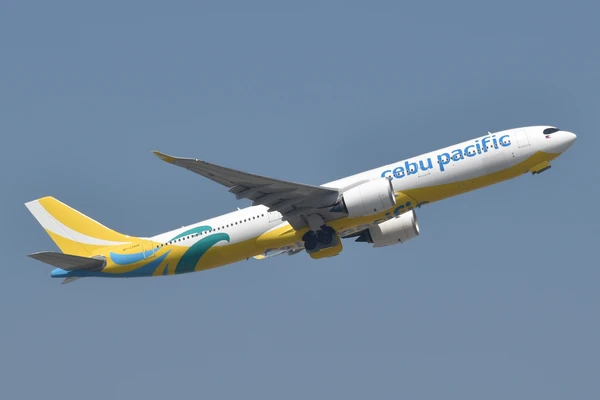
Cebu Pacific is the leading low-cost carrier in the Philippines. Known for its cheerful yellow planes, low fares, and flexible booking options, it’s the airline many Filipinos and travellers from Asia and beyond rely on to hop between islands or reach the mainland.
They’ve grown fast over the past decade—serving over 60 destinations across Asia, the Middle East, and even Australia. And while their prices are attractive, low-cost doesn’t always mean low-disruption.
Like any airline operating a large volume of flights daily, Cebu Pacific can be prone to delays—especially at congested airports like Manila (MNL), where tight turnarounds, weather, and logistics can throw schedules off track.
Is a delayed Cebu Pacific flight eligible for EU compensation?
Let’s start with the big one: Does a delayed Cebu Pacific flight qualify for compensation under European Regulation EC 261/2004?
Here’s how it works:
If your flight departed from an EU airport (yes, even on a non-EU airline), you are protected under EC 261.
If the flight was over 3 hours late on arrival, and
The delay was not caused by extraordinary circumstances (like a hurricane or political unrest),
Then you’re likely eligible for compensation.
Let’s look at some quick examples:
Barcelona to Dubai on Cebu Pacific – ✅ Covered
Frankfurt to Manila (direct) – ✅ Covered
Manila to Amsterdam – ❌ Not covered (Cebu Pacific isn’t EU-based)
Lisbon to Manila via Dubai, both flights on one ticket – ✅ Possibly covered
So it’s really about where your journey started. Not the destination, not where the delay occurred—where you boarded the plane first.
If it was in Europe, you’re protected, no matter how far away you were headed.
What kind of compensation are we talking about?
If your flight meets the EC 261 criteria, here’s what you could be looking at:
€250 for flights under 1,500 km
€400 for flights between 1,500 and 3,500 km
€600 for long-haul flights over 3,500 km
Most Cebu Pacific flights from Europe (when they’re available, often seasonally or as part of a multi-leg ticket) fall into the long-haul category—meaning €600 per person. That’s more than many round-trip tickets cost, and it’s designed to compensate you for the lost time, stress, and inconvenience.
What if the delay was caused by “operational issues”?
Airlines will often claim delays were caused by “operational challenges,” “technical checks,” or “rotation problems.” But guess what? Those aren’t valid excuses under EU law.
Unless the delay was caused by something truly beyond the airline’s control—like a volcanic ash cloud, a sudden medical emergency, or extreme weather—the airline is still responsible.
At Trouble Flight, we know the difference between real and made-up “extraordinary circumstances.” We’ll challenge weak excuses and push back when airlines try to wiggle out of paying what they owe.
What should you do during the delay?
Whether you’re stuck in Vienna, Rome, or Dubai, don’t just sit and wait. You can start preparing your claim right then and there. Here’s what you can do:
Note the original departure time and the actual time you departed (or landed).
Ask the airline staff for the reason and keep any written statements they give you.
Keep your documents—boarding pass, flight confirmation, receipts if you buy food or stay overnight.
Request care: If your delay drags past two hours, they must provide refreshments. Over three hours and you’re still at the airport? You should be getting a meal. Overnight delay? They owe you a hotel and transport.
Even if you eventually get to your destination, the airline still owes you compensation if you arrived more than three hours late and the delay was their fault.
Missed a connection because of a Cebu Pacific delay?
That makes it worse, doesn’t it? One late departure and suddenly your whole journey unravels—missed connecting flights, hotels, or events.
Here’s something most travellers don’t realize: if you booked your full itinerary (including a European departure) under one ticket, and a Cebu Pacific delay caused a missed connection—even if it was on another airline—you may still qualify for full compensation.
It’s all about how your booking was structured. So don’t worry if Cebu Pacific only flew the first leg; you’re still protected if the delay began in Europe.
What if I had to book another flight myself?
That happens more than you’d think. You wait and wait, and eventually decide to book a different flight to avoid missing something important. That’s fair—but keep your receipts.
You may be able to recover the cost of that new ticket if Cebu Pacific didn't offer a reasonable alternative or rebooking in time.
In some cases, you can even claim both compensation and reimbursement, especially if the delay caused material losses (like non-refundable bookings or prepaid tours).
Can I just accept a voucher from the airline?
They might offer it. A travel voucher, a discount code, or a food coupon. Sometimes even a smile and a round of applause (no joke—it happens on budget carriers). But be careful:
If you accept a voucher in exchange for waiving further claims, you may lose the right to full EC 261 compensation.
It’s fine to accept small goodwill gestures. Just don’t sign anything that says you agree not to pursue further action—especially without reading the fine print. Trouble Flight can help you double-check what’s fair and what isn’t.
What if the delay happened outside the EU?
That’s where things get trickier. EC 261 only applies to flights that start in the EU, or flights to the EU on an EU airline. Cebu Pacific isn’t EU-based, so inbound flights from Manila, Dubai, or Bangkok to Europe aren’t covered under EC 261.
However, all is not lost. You might still have a claim under the Montreal Convention—an international treaty that protects passengers in case of significant delays or damage. It’s not as straightforward, and the compensation amounts vary, but we can still help review and build a case.
It’s always worth checking. We’ve seen plenty of cases where passengers assumed they had no rights, but ended up being compensated after all.
Delayed flight? Here’s how to rebook smart
If you’re caught in a Cebu Pacific delay and need to get moving, here are a few travel-savvy tips:
Look for alternative routes using nearby airports—especially in Asia where city clusters like Manila, Clark, and Cebu often have overlapping services.
Ask for rebooking on the same alliance or code-share partners. Even low-cost carriers sometimes have agreements that aren’t openly advertised.
Use live tracking apps to monitor flight statuses and gate changes before they’re announced.
Don’t be afraid to ask ground staff about flights with availability, even if it means flying to a nearby city and taking a bus or train the rest of the way.
And always, always keep records of everything. Receipts, emails, screenshots. They’re gold when it’s time to file a claim.
What happens when you file a claim?
If your flight was delayed and you qualify under EC 261, Trouble Flight makes it easy to get started:
You enter your flight details into our Compensation Calculator.
We assess whether your flight is eligible under the law.
If it is, we take care of everything—from contacting the airline to filing legal action if necessary.
You don’t pay us unless we win.
Our fee is 25% (plus VAT) of the compensation, and if legal action is needed, a 50% commission (including VAT) applies—but again, only if the case is successful.
No upfront costs. No hidden charges. Just a clear, honest path to compensation.
Final thoughts
Flying with Cebu Pacific can be fun, affordable, and flexible—but like with any airline, things can go wrong. And when they do, you have rights—especially if your journey started in Europe.
A delayed flight is more than just an inconvenience. It’s lost time, missed connections, unexpected costs, and often, a lot of stress. But that stress doesn’t have to go unpaid.
If you’ve experienced a significant delay on a Cebu Pacific flight from Europe, don’t let the airline decide what your time is worth.
Take a minute to submit your flight info to Trouble Flight. You might be closer to €600 than you think.